Showing posts with label guest post. Show all posts

Monday, June 02, 2014

Conversations about Australian Identity by Anita Heiss

This is an edited version of Anita’s speech at the recent Australian Booksellers Association conference dinner in Melbourne. The original speech, on the topic Anita was given – It all starts with a conversation – can be read on Anita’s blog, here.

I’m from the Wiradjuri nation of central NSW. My mob’s from Cowra, Brungle mission, Griffith, Tumut and Canberra. I was born in Gadigal country, most of you will know that as the city of Sydney, and I’ve grown up on the land of the Dharawal people near La Perouse.

My home suburb is strategically placed between Long Bay Jail, Malabar Sewerage Works and Orica Industrial estate. It’s the perfect setting for creative inspiration and I’ve written many of my books there. I’m pleased to be here in the home of the Kulin nation and pay my respects to those whose stories have been embedded in this landscape for tens of thousands of years.


It’s every author’s dream to be able to address the ABA dinner because we know that without you booksellers, the books we have devoted our hearts, minds, sleeping and waking hours to, go nowhere.

I have been connected to booksellers around Australia for almost two decades as a writer but also as a reader, and I have learned much about the industry from those who have generously and quite simply just talked to me. So I am grateful for the opportunity to be here to talk about how conversations have played a role in the development, not only of my books, but also my life as a writer and my role as an Indigenous Literacy Day and Books in Homes Ambassador.

Wednesday, May 28, 2014

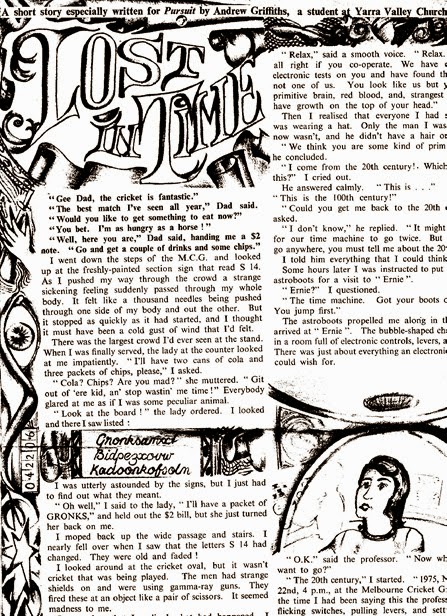
How I Got Started as a Writer by Andy Griffiths

I wrote my first ‘book’ when I was five years old.

It was in the form of a get well card for my dad. It was a piece of paper folded into three and was called ‘A Little Boooke I Madee’.


It said, ‘I hear your sick. So turn over the pages and see what you are if you don’t get better.’ Then, when my poor, sick father turned the pages, he was greeted with this disturbing picture of himself as some sort of beast lying on the ground next to a tombstone which says ‘Doomed’. (I’m not sure why I chose to draw him like this—maybe we had recently buried a dead pet in the backyard and I was worried we would have to do the same to him if he didn’t get better!)


So, basically, what I was telling him was ‘Get better soon … or you are DOOMED!’ It may have been quite an unconventional approach for a get well card, but it was effective because he got better really fast. I wasn’t about to let it rest at that, however.

Tuesday, May 27, 2014

Are you a true Dr. Frankenstein? by Josie Montano

I don’t mean to scare you!

But I use Dr. Frankenstein’s methods when it comes to creating a character. As you know, the eccentric scientist gave life to his ‘creation’ Frankenstein by putting together bits and pieces of other bodies, gruesome, I know, but a fascinating idea for a writer.


Keep in mind also that Dr. Frankenstein is a creation of another writer’s mind, Mary Shelley, so not only did she create a character, her character created a character. Phew - she was clever!


Monday, May 26, 2014

Canoes by Bruce Pascoe

When I think about it, I realise my last three books, Bloke, Fog, a Dox and Dark Emu, have been in honour of Muns Hammond. He’s the hero behind all of them.

Magabala Books, 2014

Dark Emu is about the things our education fails to tell us. That Aboriginal people built houses, sewed clothes, sowed crops, tilled the land, irrigated young plants …and made canoes.


Wednesday, May 21, 2014

What Makes a Book Series Seriously Good? by Jess Black

Do you have a favourite book series?

Allen & Unwin

I do! I have many. In fact, there’s nothing I like more than being hooked on a good series and really wanting to get the next book to find out what happens next! I can become very attached to characters in series, they become like old friends. It’s the same for me when reading or writing a series.

Tuesday, May 20, 2014

Small moments in big pictures by Dianne Wolfer

I love stories about small moments that are also part of bigger historical pictures.


Lighthouse Girl is based on the true story of Fay Catherine Howe. She was the daughter of an Albany lighthouse keeper and lived on Breaksea Island in 1914. World War One was declared on Fay’s birthday and so that seemed a good place to begin the book…

Monday, May 19, 2014

Living the Dream by Barry Jonsberg

Do you want to know how I became a writer?


Okay. I thought you probably didn’t, but there’s no need to be rude about it. And you’ve started reading now, so you might as well finish.

I always wanted to be a writer, ever since I was knee high to a grasshopper. How cool to walk into a bookshop and see a book with my name on it! Pick it up, ruffle the pages… (just for the record, I would like to apologise to all those authors whose names I crossed out in random bookstores and replaced with my name in texta. I confess. Romeo and Juliet was actually written by William Shakespeare and not Barry Jonsberg. Sorry, Will.)

The trouble was, I found I had suddenly become old and my dream hadn’t happened. Why? I asked myself. And then, one day the reason burst through my confused thoughts, like a sun’s rays through dark clouds.

Wednesday, May 14, 2014

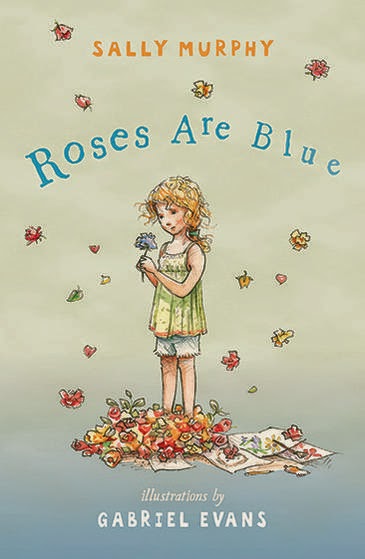
Why So Sad? by Sally Murphy

I have a confession.

I love to make people cry! The good news is, I also like to make them laugh. And if they can laugh and cry at the same time that’s pretty good, too.


You see, as an author of books for children, I believe it’s my job to share stories which make readers feel. It’s when we care what happens to a character that we keep turning pages. If a story makes us laugh, or cry, or sigh, or even tremble with fear, then we are connecting with that story, and that’s a good thing.


Tuesday, May 13, 2014

Food! Glorious Food! by Goldie Alexander

Recently, I came across an article dividing authors into two camps; those that include descriptions of food and those that don’t. Children’s authors tend to fall into the first camp, often using food as a way of illustrating character, plot and setting in their stories.


Lewis Carrol knew this. If the ‘Mad Hatter’s Tea-party’ in Alice in Wonderland was a sly dig at the middle-class, he also knew that some foods make us feel safe, as when Alice helped herself to some tea and bread and butter. Others do not, as Alice shrinks and grows, depending on which side of the mushroom she eats.

Poverty can mean hunger. Tom, the chimney sweep in The Water Babies, cried... when he had not enough to eat, which happened every day in the week... But when he leaves his discarded body behind, he eats water- cresses, perhaps; or perhaps water-gruel and water milk.

Enid Blyton used food in her Famous Five series to show happiness: 
The picnic was lovely. They had it on the top of a hill, in a sloping field that looked down into a sunny valley...The children ate enormously, and Mother said that instead of having a tea-picnic at half-past four they would have to go to a tea-house somewhere, because they had eaten all the tea sandwiches as well as the lunch ones!

Monday, May 12, 2014

Why I love writing history by Pamela Rushby

I write a lot of things. But historical fiction ("faction") is absolutely, absolutely my favourite.

Why? I call it the WOW! factor. That moment when I come across an incredible historical incident or event that makes me go WOW! can that really be true?


Usually, it is true. Because the best, the strangest, the most riveting, heart-breaking, laugh-out-loud stories aren't fiction. They're real. They come from history.

I'm constantly amazed, overwhelmed, when I come across one of these couldn't-possibly-be-true-but-they-actually-are stories. Stories that make me immediately desperate to put my own characters in the middle of the action and explore what could happen IF …


Thursday, May 08, 2014

Team Australia 2014: Canberra Grammar School

Introducing the 2014 Australian team from Canberra Grammar School:  


Jesse, Leo, Angus, Nick and Mrs Hudson with Wayne Mills at the 2014 ACT regional heat

Wednesday, May 07, 2014

Research? But I write fiction! by Sherryl Clark

When I first starting writing chapter books and novels, I used a lot of stuff from my own life, but it wasn’t long before I realised that I would have to do some research for many of the things I wanted to include.


Of course, when I began my pirate novel, Pirate X, I assumed I’d just need to know about pirates and a bit about the 1700s, but soon my piles of books and folders of photocopied information grew and grew.

What are some of the particulars I had to track down?

We all know about pirates and gold doubloons! But those mostly came via Spanish ships sailing back from Central and South America. People who lived in 1717 used a variety of money. The American colonies had no currency of their own, and used everyone else’s. So a handful of money might include English shillings and pence, Dutch coins, Spanish gold and silver and French coins. A shopkeeper had to be very careful about their values. The easiest way was to weigh the coins on small scales.

Tuesday, May 06, 2014

Reading Up – Why It’s Important to Stretch Yourself by Tania McCartney

There’s something fabulous about stretching yourself as a reader. Not only in terms of entering new and exciting worlds well beyond your years (just wait till you’re reading some of the world’s great adult works!) but also in terms of stretching your comprehension and vocabulary.


When my daughter was eight, I gave her my vintage copy (I won’t tell you how old it was!) of Enid Blyton’s The Magic Faraway Tree. You may know it, and if you do, you’ll know it’s particularly magical. My daughter loved the book. She absorbed it quickly, and didn’t once ask me what any of the ‘weird, old-fashioned’ words meant.

Monday, May 05, 2014

Surfing Strange Tsunamis by Jackie French


"Stories tell us who we are. They teach us empathy so we understand who others are. They give us the power to imagine and create the future."

Jackie French's theme for her term as the 2014 Australian Children's Laureate is 'Share a Story'. Thank you, Jackie, for sharing this travel story with us at Reading for Australia
.

Last night, I time-travelled to Ancient Greece, almost two and a half thousand years ago. I ate dinner (tough mutton and very sweet figs) while Socrates talked and young Plato scribbled the notes that one day he’d turn into his book – that millennia later I'd read.


Books take you on many journeys.

I’ve been to school in a volcano (School For Heroes), surfed a tsunami (Elephant Alert), milked a goat on the ship that brought Captain Cook to Australia (The Goat Who Sailed the World). I’ve watched the battle of Waterloo (Nanberry: Black Brother White) and wept at the large and small  tragedies of World War I (A Rose for the Anzac Boys).

click to enlarge

Thursday, May 01, 2014

Welcome by Wayne Mills

Hello and welcome to the third online literary festival at Reading for Australia.


Once again, we are pleased to bring you terrific guest authors, book reviews by kids around the world, and, of course, lots of books for you to discover during this month-long reading adventure.

Friday, April 25, 2014

Anzac Day

Though born from the doomed campaign at Gallipoli, the Spirit of Anzac is not really about loss at all. It is about courage and endurance, duty, love of country, mateship, good humour and a sense of self worth and decency in the face of dreadful odds. (quote of former Governor-General of Australia, Sir William Deane, at the Australian War Memorial's Gallipoli exhibit)

April 25 marks the anniversary of the Gallipoli campaign in 1915, the first major military action fought by Australian and New Zealand forces (the Australian and New Zealand Army Corps - ANZAC) in the First World War.

(published by Angus and Robertson, 2008)

The Australian War Memorial's website says that "although the Gallipoli campaign failed in its military objectives, the Australian and New Zealand actions during the campaign left us all a powerful legacy. The creation of what became known as the “Anzac legend” became an important part of the identity of both nations, shaping the ways they viewed both their past and their future."

Friday, March 14, 2014

Kings and Queens, Insects and Mice: Orange 2014

The second heat of the 2014 Kids’ Lit Quiz in Australia was the third year Orange has hosted the Kids' Lit Quiz competition and lots of old friends were there to enjoy the excitement that is part of the ‘Sport of Reading’.


Kids' Lit Quiz Australia 2014: Orange regional heat

We've come a long way since 2012 when 13 teams participated in the first ever Kids' Lit Quiz in Australia - in Orange!


Friday, March 07, 2014

Stripes and Stars: Queensland 2014

The Cat in the Hat by Dr Seuss (1957, Random House, Houghton Mifflin)

"How many stripes on the Cat in Hat's hat?"

The question drew chuckles, in-the-air finger counting and some frowns from the 30+ teams of star readers assembled at the Queensland heat of the 2014 Kids Lit Quiz, held at the Ipswich Girls Grammar School on Tuesday, February 19.

It was one of 100 questions that challenged the breadth and depth of knowledge that was needed to compete in the "sport of reading".


Friday, May 17, 2013

Boy Soldier by David Mussared

Anzac Day is a topic which has been addressed in a number of children's books, including those written by our supporter authors, Jackie French, A Rose for the Anzac Boys and Dianne Wolfer, Light Horse Boy.

This website has a longer list of books with an Anzac theme together with other resources about the significance of Anzac Day for children from Australia and New Zealand.

Today's post, from Adelaide journalist, David Mussared, is a personal reflection.  We recommend that younger readers ask an adult to read it first to determine whether it is suitable for that reader.


Click to enlarge image